Content insight
Toggle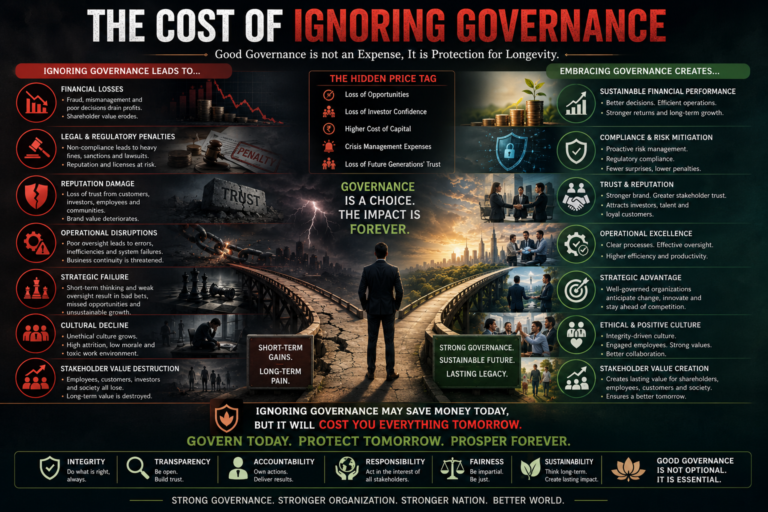
Many organizations believe governance becomes important only when regulators raise concerns, auditors identify issues, or a crisis emerges. Until then, governance is often viewed as a compliance requirement rather than a strategic business priority.
The reality is very different.
Most governance failures begin long before they become visible. Weak accountability, delayed decision-making, founder dependency, passive boards, rising compliance pressure, succession gaps, and declining organizational culture often develop gradually. Because these issues rarely create immediate financial impact, they are frequently overlooked.
By the time the consequences become visible, the cost is often significant.
Insight
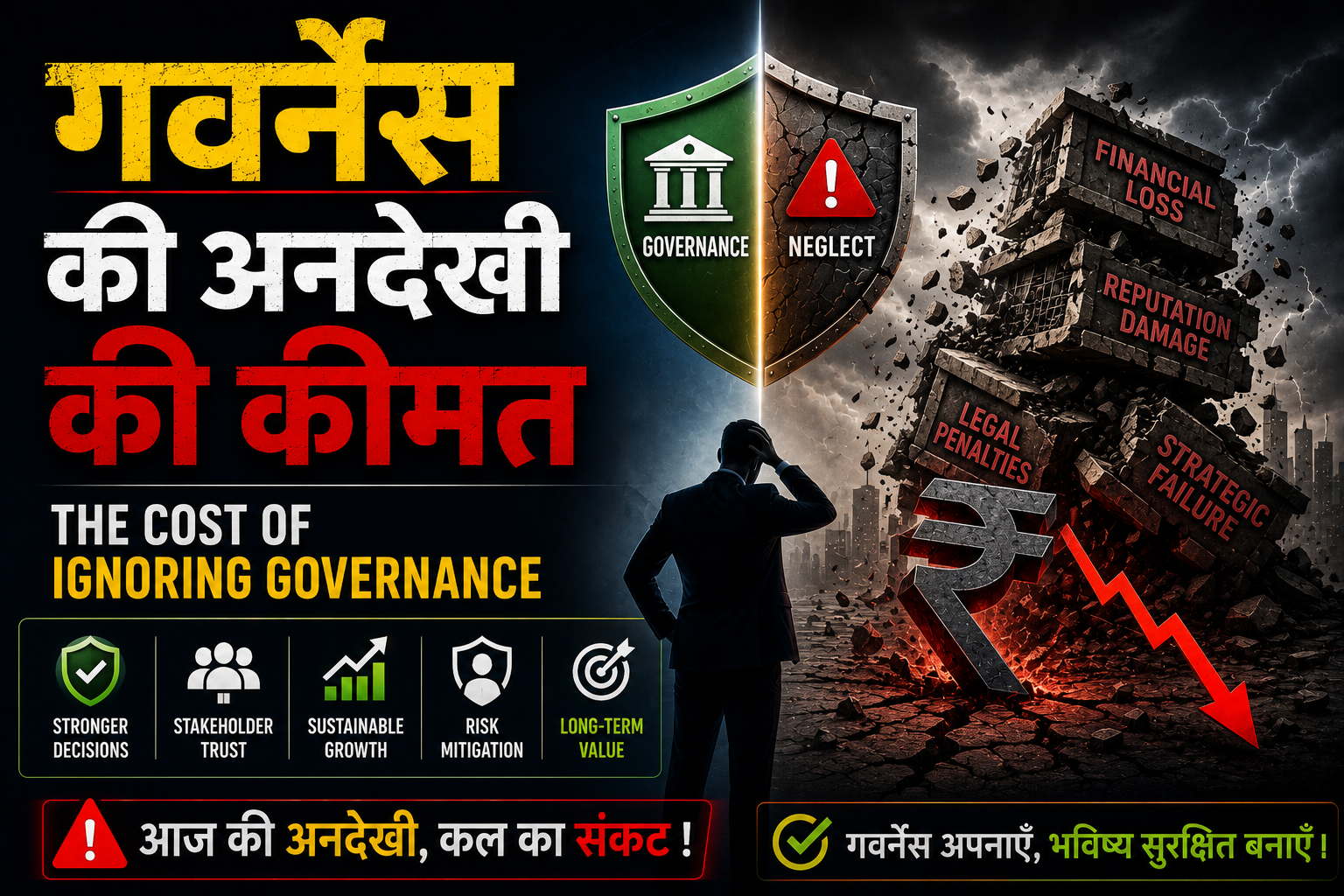
The cost of ignoring corporate governance is rarely measured only in financial terms.
It appears in leadership fatigue when every decision depends on one individual. It appears in weak accountability when responsibilities become unclear. It appears in delayed decisions when important opportunities are missed. It appears in cultural decline when employees stop speaking openly and innovation begins to slow.
In today’s business environment, organizations also face increasing cyber risks, AI disruption, regulatory scrutiny, and stakeholder expectations. These challenges require stronger board governance and more effective oversight than ever before.
One of the most common misconceptions is that governance slows growth. In reality, effective corporate governance enables sustainable growth by creating clarity, accountability, transparency, and better decision-making.
As the teachings of the Bhagavad Gita remind us, awareness without action serves little purpose. Identifying risks is important, but acting on them with clarity and responsibility is what protects long-term value.
Board-Level Recommendation
Boards and leadership teams should treat governance as a strategic asset rather than a compliance exercise.
Effective board governance requires:
• Independent thinking and constructive challenge
• Strong risk management and oversight
• Reduced dependency on individual leaders
• Robust succession planning
• Greater accountability across the organization
• Technology and AI awareness at the board level
• Continuous monitoring of culture and leadership effectiveness
Strong independent directors do more than review reports. They help organizations identify emerging risks, improve decision quality, and strengthen long-term resilience.
The most effective boards focus not only on today’s performance but also on tomorrow’s sustainability.
Closing Reflection
Governance failures rarely begin with a scandal.
They begin with small issues that are ignored, accepted, or postponed.
Strong organizations understand that corporate governance is not about controlling growth—it is about protecting the future.
The true cost of ignoring governance is often discovered only when it becomes too late to avoid.