Content insight
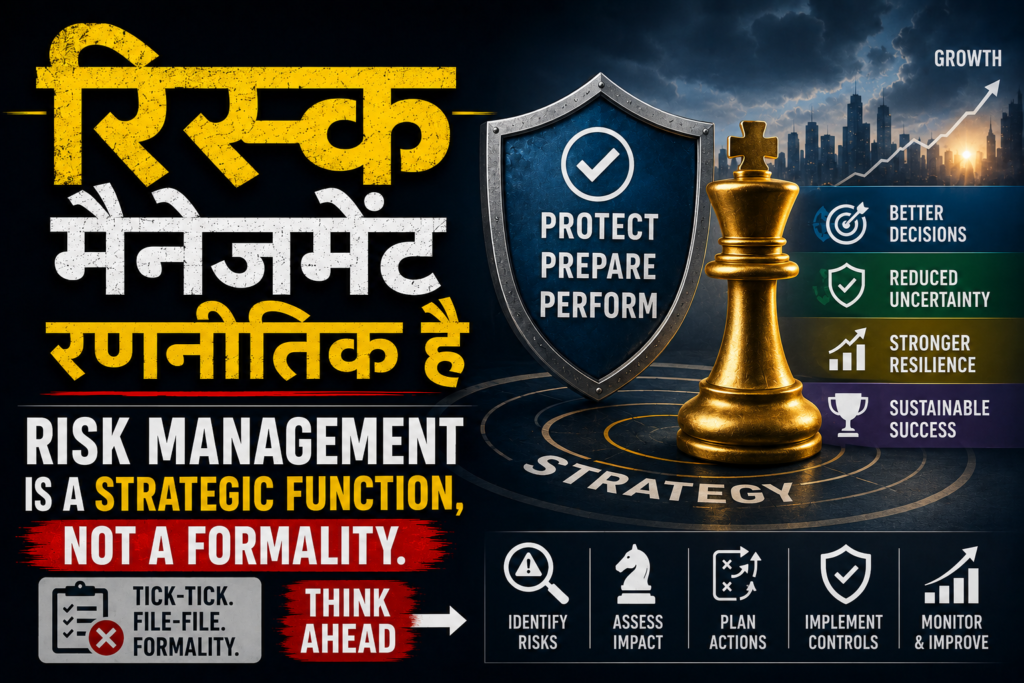
ToggleIn many organizations, risk management is still treated as a compliance exercise — reviewed periodically, documented carefully, and discussed only when required.
That approach creates a dangerous illusion.
Real risk does not wait for audit meetings or quarterly reports. It builds quietly through delayed decisions, weak controls, leadership blind spots, market shifts, technology disruption, and overlooked human issues.
Video
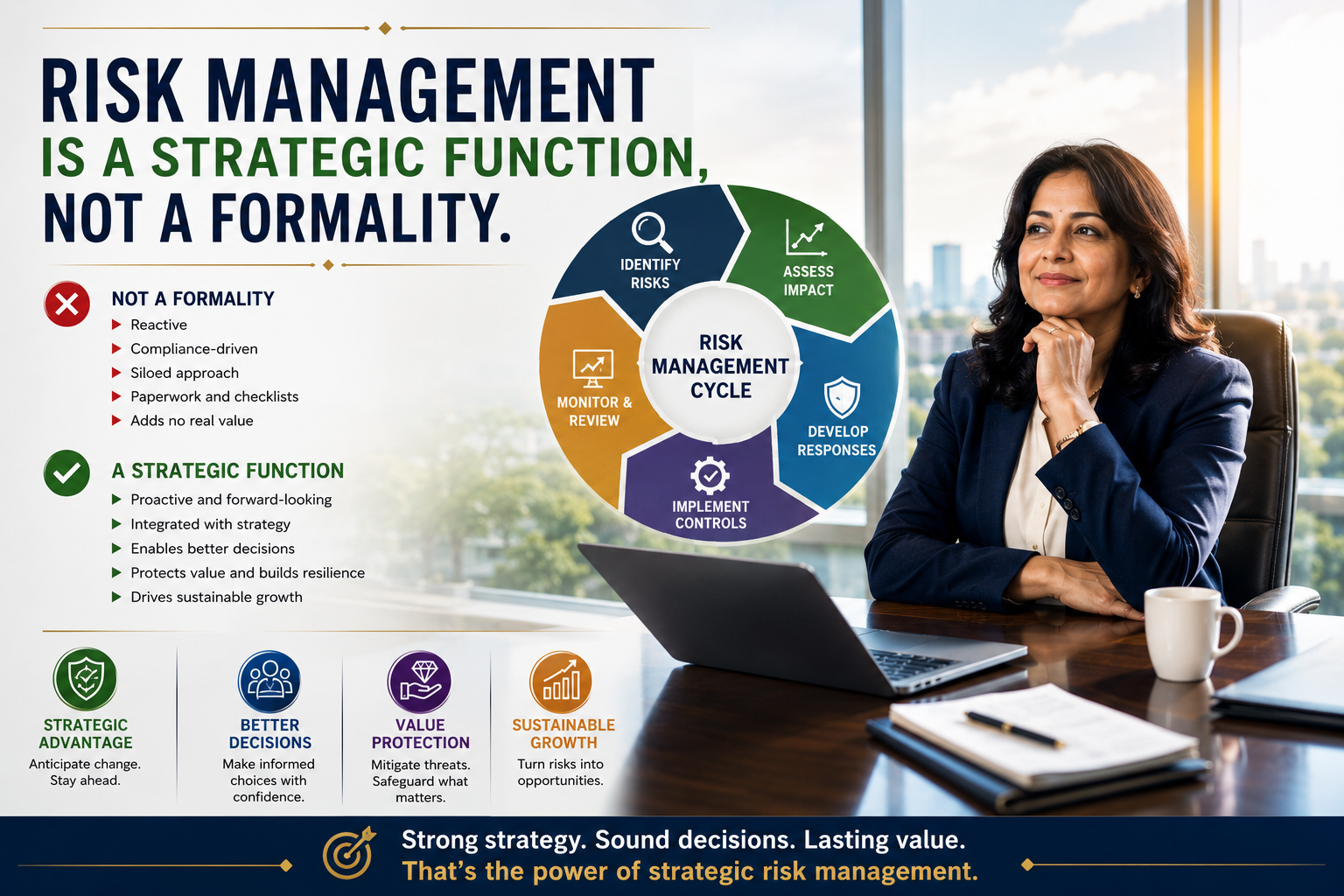
The strongest companies understand that risk management is not a defensive process. It is a strategic capability.
When boards view risk strategically, they ask different questions:
What are we not seeing today that may affect us tomorrow?
Where are we overly dependent on one person, one customer, or one assumption?
Are our systems prepared for digital disruption and AI-driven change?
Are ethical shortcuts creating future liabilities?
Is our governance helping us anticipate, or only react?
Strategic risk management protects far more than compliance.
It protects reputation.
It protects growth.
It protects investor confidence.
It protects promoter wealth.
A mature board does not wait for problems to become visible.
It builds the discipline to identify them early — and the wisdom to respond before they become costly.
In the 21st century, risk oversight is not a formality assigned to committees.