Content insight
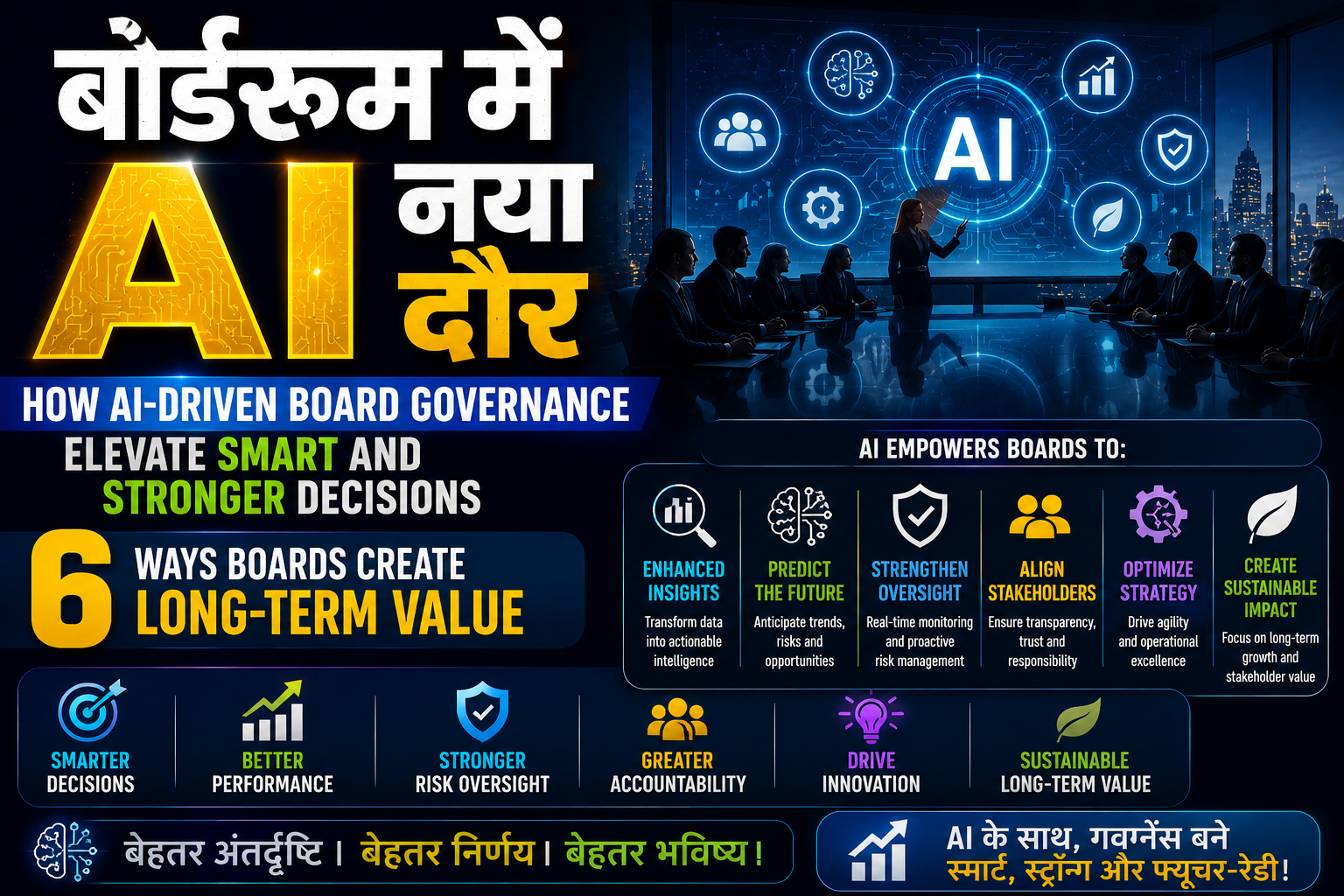
ToggleA board member with AI-driven technological insight brings much more than technology knowledge to the boardroom. Such a AI-driven director helps the organization make better decisions, identify risks earlier, and prepare for future challenges.
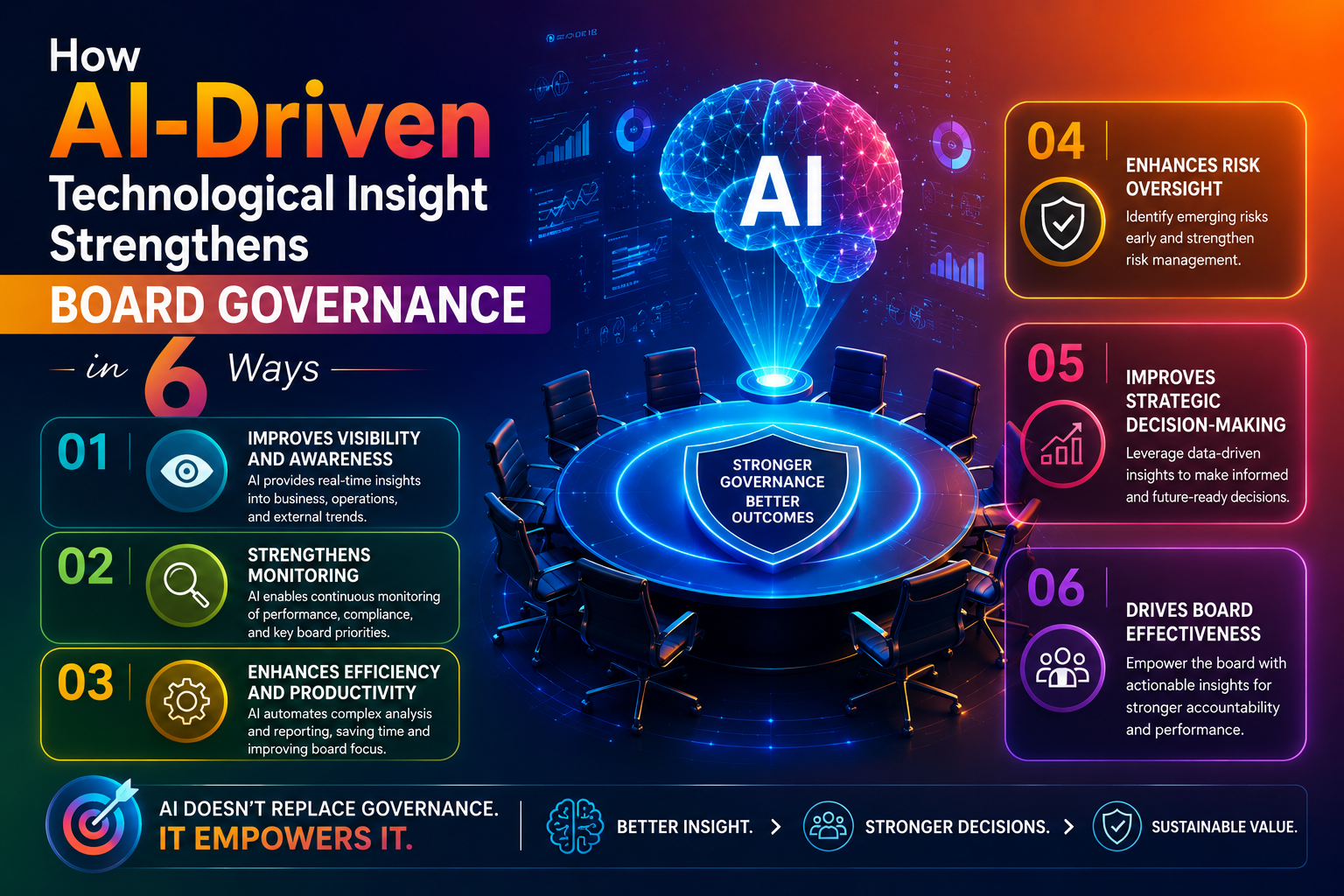
1. Use Data for Sharper Decisions
Boards are often presented with large volumes of reports, dashboards, and performance data. The challenge is not the lack of information—it is identifying what truly matters.
AI can analyze vast amounts of data and identify trends, anomalies, and patterns that may not be immediately visible through traditional reporting.
For example, instead of reviewing dozens of operational reports, boards can use AI-driven insights to quickly identify declining customer satisfaction, falling productivity, increasing employee attrition, or emerging financial concerns.
This enables directors to focus discussions on strategic issues rather than spending excessive time reviewing historical information.
Better data leads to better decisions.
2. Detect Emerging Risks Earlier
One of the greatest responsibilities of board governance is risk oversight.
Traditional risk management often identifies risks after warning signs have already appeared. AI helps organizations move from reactive risk management to proactive risk management.
AI systems can continuously monitor business activities, customer behavior, cybersecurity threats, regulatory developments, and operational performance.
For example, unusual financial transactions, abnormal system activity, supply chain disruptions, or customer complaints can be detected much earlier.
Early detection gives management and the board valuable time to act before a problem becomes a crisis.
In governance, timing often determines whether a risk remains manageable or becomes costly.
3. Evaluate Automation Opportunitiesr
Many organizations still rely on manual processes that consume time, increase costs, and create opportunities for error.
A board member with technology awareness can help management identify areas where automation can improve efficiency.
Examples include:
• Compliance monitoring
• Internal controls testing
• Financial reconciliations
• Customer service processes
• Regulatory reporting
• Risk monitoring activities
Automation does not replace people. It allows employees to focus on higher-value activities while reducing repetitive tasks.
Boards that encourage responsible automation often improve both productivity and operational resilience.
4. Improve Board Reporting Quality
Many board packs exceed hundreds of pages. Directors often receive large volumes of information but limited actionable insight.
AI can transform reporting by highlighting:
• Key trends
• Significant exceptions
• Emerging risks
• Performance deviations
• Strategic opportunities
Rather than reviewing extensive reports, directors can focus on the issues that require attention.
The result is more productive board discussions, improved oversight, and stronger governance outcomes.
The objective is not more information.
The objective is better information.
5. Understand Digital Disruption
Every industry is experiencing digital transformation.
Artificial intelligence, automation, cloud computing, data analytics, and digital platforms are changing business models at unprecedented speed.
Boards that fail to understand these changes may underestimate competitive threats.
A technologically informed board member can help directors evaluate:
• New business opportunities
• Competitive threats
• Changing customer expectations
• Technology investments
• Industry disruption risks
Understanding disruption early allows organizations to adapt before competitors force them to react.
6. Prepare for Future Competitiveness
Board governance is not only about today’s performance.
It is also about ensuring the organization remains relevant and competitive tomorrow.
AI can support long-term strategic planning by providing deeper insights into market trends, customer behavior, workforce needs, and emerging business opportunities.
Directors who understand both governance and technology can help organizations build sustainable competitive advantages.
They help answer critical questions:
• What will our industry look like in five years?
• Which technologies will reshape customer expectations?
• What capabilities must we build today for future growth?
Organizations that prepare early are usually the organizations that lead tomorrow.
Technology Does Not Replace Judgment, It Strengthens It
Artificial intelligence can process information faster than any human.
But it cannot replace wisdom, ethics, experience, judgment, or accountability.
Those responsibilities remain with leadership and the board.
The most effective boardrooms of the future will not be those that rely solely on technology or solely on experience.
They will be those that successfully combine human judgement, ethical leadership, governance discipline, and AI-driven insight to make faster, smarter, and more responsible decisions.