Content insight
Toggle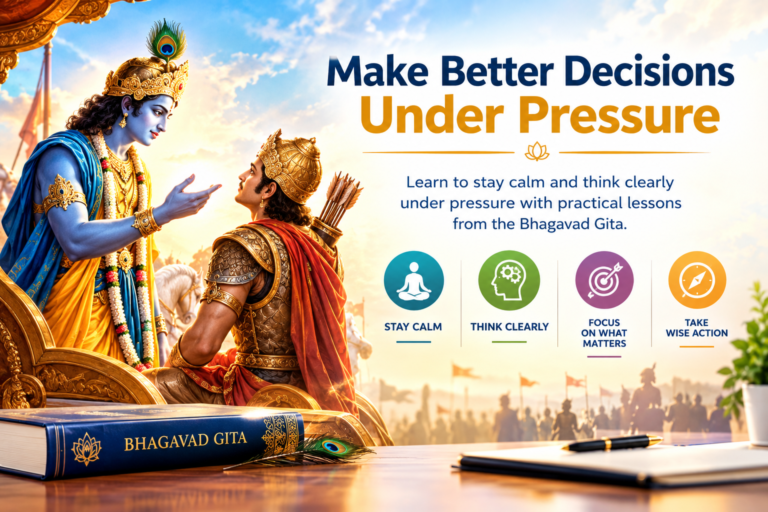
Making better decision, in a boardroom meeting or place where everyone expects you to have the answer, even when you don’t have all the facts, Have you ever been in under pressure?
Your boss wants an immediate decision. A client is waiting for your commitment. Your team is divided. A senior colleague is pushing for a quick conclusion, and you know that one wrong decision could affect your credibility, your career, or your company’s future.
You cannot show your confusion. You cannot afford to look indecisive. So, you feel compelled to respond quickly—even when your mind is racing and your instincts are clouded by fear, frustration, or the pressure to prove yourself.
Perhaps you have approved a proposal you weren’t fully convinced about, agreed to an unrealistic deadline, rejected a good idea because it challenged your ego, or stayed silent in a meeting when you should have spoken up.
The real challenge in corporate life is not simply making decisions. It is making the right decisions when pressure, people, power and emotions pull you in different directions.
This is where the Bhagavad Gita becomes surprisingly relevant to modern leadership and professional life.
On the battlefield of Kurukshetra, Arjuna faces an overwhelming decision at a moment when the consequences could change everything. His confusion is not a sign that he lacks ability; it reflects the difficulty of thinking clearly when emotions and responsibilities collide.
Through Krishna’s guidance to Arjuna, we can discover practical ways to manage workplace pressure, separate facts from assumptions, keep ego out of critical decisions and act with greater clarity—even when there is no easy answer.
When Everyone Wants an Answer—Right Now
Your management wants an answer.
Your client is waiting.
Your team is looking at you.
Your phone keeps ringing.
You have incomplete information, two competing recommendations and very little time.
Someone says:
“We need to decide now.”
And suddenly, you feel pressure to give an answer—not necessarily the right answer.
Have you ever made a decision under pressure and later thought:
“Why did I do that?”
Perhaps you said yes when you should have said no.
Perhaps you rejected an idea because you were angry.
Perhaps you made a financial or career decision because everyone else seemed confident.
Pressure can make intelligent people behave emotionally.
This is where the Bhagavad Gita offers an important lesson.
Arjuna’s Decision Crisis
Before the battle begins, Arjuna is overwhelmed.
He sees his relatives, teachers and friends on the battlefield.
His mind becomes confused.
He says, in effect:
“I don’t know what I should do.”
Notice something important.
Arjuna does not lack information.
He knows who is standing on the battlefield.
He knows his responsibilities.
He knows the consequences may be enormous.
His problem is that emotion has clouded his ability to make a decision.
That happens in professional life too.
The problem is often not lack of intelligence.
It is decision-making under emotional pressure.
Don't Confuse Urgency With Clarity While Making Better decision
A situation can be urgent without requiring an emotional decision.
Suppose your company receives an unexpected investment opportunity.
Everyone is excited.
Your colleague says: “If we don’t invest today, we’ll miss the opportunity.”
You feel pressure.
But a calm decision-maker asks:
What do we actually know?
What don’t we know?
What are the risks?
What assumptions are we making?
What happens if we are wrong?
What alternatives do we have?
What decision is reversible?
What decision is difficult to reverse?
These questions slow the emotional reaction and improve the quality of thinking.
The Gita's Lesson: Clarity Before Action
Krishna does not simply tell Arjuna:
“Do this because I said so.”
The Gita is a dialogue.
Krishna explains different dimensions of duty, knowledge, action, attachment, discipline and the nature of the mind.
Arjuna listens, questions and reflects.
This provides a useful professional principle:
Good decisions require reflection, not merely reaction.
You don’t have to remove emotion from decision-making.
You have to prevent emotion from becoming the only decision-maker.
A Workplace Example of make decision under pressure
Imagine that your manager criticizes your proposal during a meeting.
You feel embarrassed.
Immediately afterward, another colleague suggests that you abandon the entire project.
You are angry and want to prove your manager wrong.
You have two choices.
Emotional response:
“Fine. If they don’t value my work, I’ll stop putting in extra effort.”
Deliberate response:
“What specifically was criticized? Which parts of the proposal need improvement? Which parts remain valid?”
The second response protects your long-term interests.
You don’t have to surrender your position.
You simply refuse to make a permanent decision from a temporary emotion.
The 10-Minute Decision Rule
When circumstances allow, create a small gap between stimulus and decision.
Ask:
1. What happened?
Write the facts.
2. What am I feeling?
Anger? Fear? Excitement? Ego? Anxiety?
3. What am I assuming?
Separate evidence from interpretation.
4. What are my options?
Don’t assume there are only two.
5. What are the consequences?
Consider both short-term and long-term effects.
6. What is my responsibility?
What decision aligns with your professional role and values?
7. What can I decide now?
Some decisions can wait.
Others cannot.
The goal is not to become slow.
The goal is to become deliberate.
Don't Make Your Ego Part of Every Decision
One of the most difficult workplace situations occurs when your idea is rejected.
Your mind may say:
“They rejected my idea, therefore they rejected me.”
But an idea is not your identity.
A proposal can be wrong.
A strategy can need improvement.
A presentation can fail.
None of these automatically means you are a failure.
When you separate your identity from your idea, you become much better at learning.
Your Decision Challenge
For the next week, whenever you face an important decision, write:
FACTS → FEELINGS → OPTIONS → CONSEQUENCES → ACTION
Then ask:
“If my ego were completely silent, what would I choose?”
That one question can change the quality of your decisions.
Final Thought
Kurukshetra reminds us that difficult decisions rarely arrive when everything is calm.
They arrive when the stakes are high.
The professional challenge is not to eliminate pressure.
It is to develop enough inner stability to think clearly while the pressure is present.
Before your next important decision, pause.
Breathe.
Separate facts from fear.
Then act with clarity.