Content insight
Toggle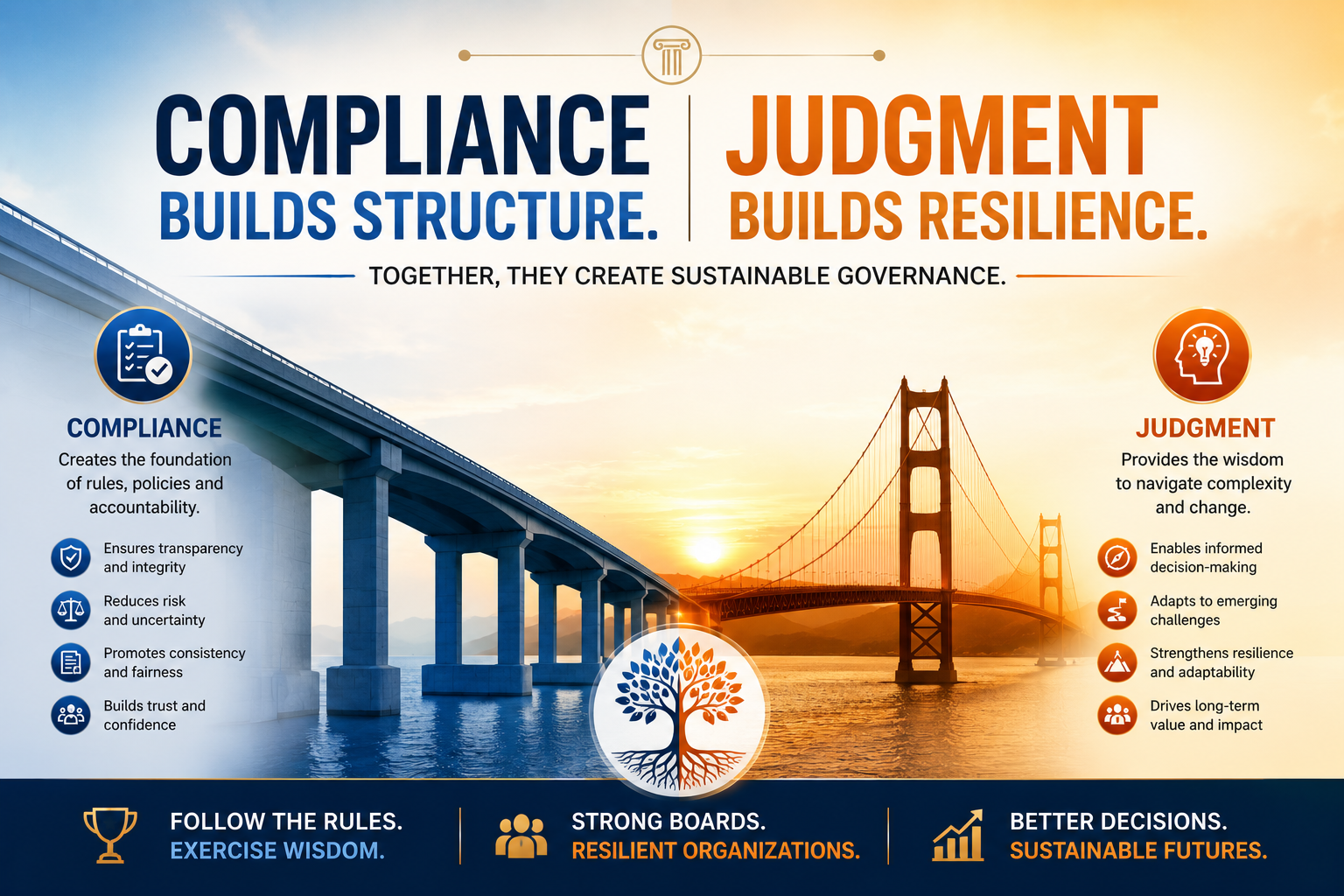
The Difference Between a Formal Board and a Functional Board
Many boards Governance that are formally constituted, compliant, and well-documented. Meetings are held, papers are circulated, and statutory requirements are fulfilled. Yet during periods of uncertainty, such boards often add limited strategic value.
The challenge is not the presence of a board. It is whether the board meaningfully strengthens leadership decisions.
Insight
Current Problem
A common assumption is that if board meetings are conducted regularly, minutes are recorded, and all statutory approvals are completed, governance is effective. On paper, everything appears sound.
However, many organizations discover during periods of uncertainty that compliance alone does not guarantee strong leadership. When faced with a major market shift, a cybersecurity event, succession challenge, reputational issue, or strategic disruption, some boards become observers rather than contributors.
The issue is not whether the board exists. The issue is whether it functions as a strategic body or only as a formal one.
A formal board often fulfills obligations. A functional board strengthens outcomes.
Understanding the Difference
A formal board generally operates around structure. It ensures that meetings are held, agendas are reviewed, and approvals are documented. It focuses on governance as a process.
A functional board operates around judgment. It helps management think clearly, challenge assumptions, and improve decision quality. It sees governance as stewardship.
The difference becomes visible in moments of complexity.
A formal board may review financial statements.
A functional board asks what the numbers are not revealing.
A formal board may note operational risks.
A functional board examines whether those risks signal a deeper structural issue.
A formal board may accept management presentations.
A functional board probes whether the strategy remains relevant in a changing environment.
This difference may appear subtle, but over time it determines whether a company merely remains compliant or becomes resilient.
Why This Matters in the Present Scenario
The 21st-century business environment is fundamentally different from the one many traditional boards were designed for.
Today, organizations are navigating:
- Artificial intelligence and automation
- Cybersecurity threats
- Rapid competitive disruption
- Talent shortages
- Regulatory complexity
- Reputation risks amplified by digital media
- Investor scrutiny
- Generational transitions in leadership
These challenges are interconnected. They cannot be managed by reviewing reports alone. They require interpretation, foresight, and balanced judgment.
That is why boardrooms now need a broader mix of capability.
The modern board must combine governance understanding with technology awareness, ethical judgment, and strategic maturity.
The Role of New Board Competencies
A functional board increasingly depends on members who bring diverse and future-relevant capabilities.
AI and Technology Awareness
Artificial intelligence is no longer only a technology issue. It affects operations, risk monitoring, customer engagement, workforce planning, and strategic decision-making.
Boards do not need every director to be technical. But they do need directors who understand how digital tools can improve oversight and reveal patterns earlier.
Technology brings speed. Boards provide context.
The combination creates better decisions.
Ethical Judgment
In complex organizations, not every decision is answered by regulation. Many critical situations involve judgment where legal compliance may still leave ethical questions unresolved.
This is where values-driven leadership matters.
The teachings of the Bhagavad Gita offer a powerful framework: act with clarity, discipline, and duty, without being driven by fear, ego, or short-term gain.
Boards increasingly benefit from directors who bring this steadiness—especially when pressure, uncertainty, or conflicting interests arise.
Board Maturity
Experience is valuable, but maturity adds a different dimension.
Board maturity means knowing:
- when to challenge management
- when to support management
- how to ask difficult questions constructively
- how to interpret silence
- how to identify hidden dependencies
- how to remain calm in crisis
These qualities turn governance into strategic value.
Board-Level Recommendation
Boards should periodically conduct an honest self-assessment.
The question is not whether governance processes are in place. The real question is:
Are we improving the quality of decisions made by the company?
To become functional rather than merely formal, boards should focus on:
- strengthening independent thought
- integrating digital and AI awareness
- improving committee effectiveness
- enhancing strategic discussions beyond quarterly reviews
- bringing ethical perspective into decision-making
- reducing promoter dependency
- creating succession depth
- increasing board diversity of expertise
Companies should also evaluate whether their board composition reflects future needs rather than past achievements.
A board designed for yesterday’s challenges may not be equipped for tomorrow’s realities.
Closing Reflection
A formal board gives an organization governance structure.
A functional board gives it confidence, foresight, and resilience.
The difference is not in how many meetings are held or how many documents are approved. It lies in whether the board strengthens leadership during moments that truly matter.
As companies face accelerating change, boards are expected to contribute more than oversight. They are expected to bring wisdom, strategic perspective, and future readiness.
The strongest organizations are not those with the most visible boards.
They are those with boards capable of combining governance discipline, ethical clarity, and technological understanding to help leadership make better decisions in a more uncertain world.
Pingback: The Cost of Ignoring Governance - Ethical Governance Independent Director
Pingback: %Risk Management Is a Critical Leadership Responsibility% - Ethical Governance Independent Director